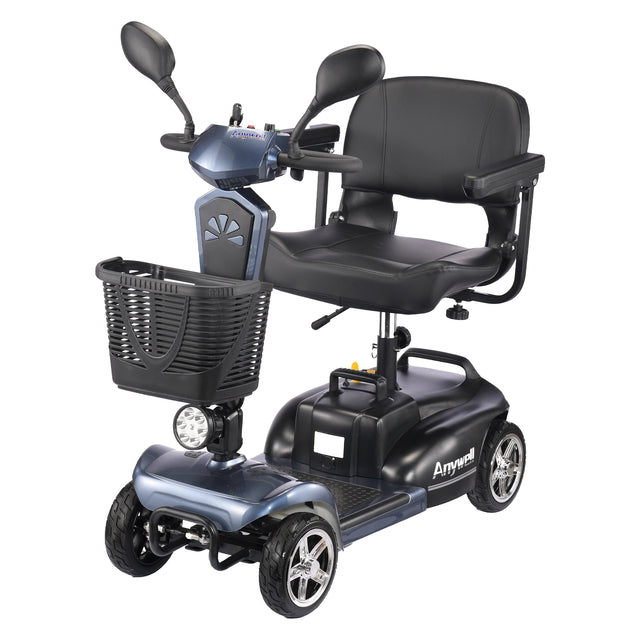
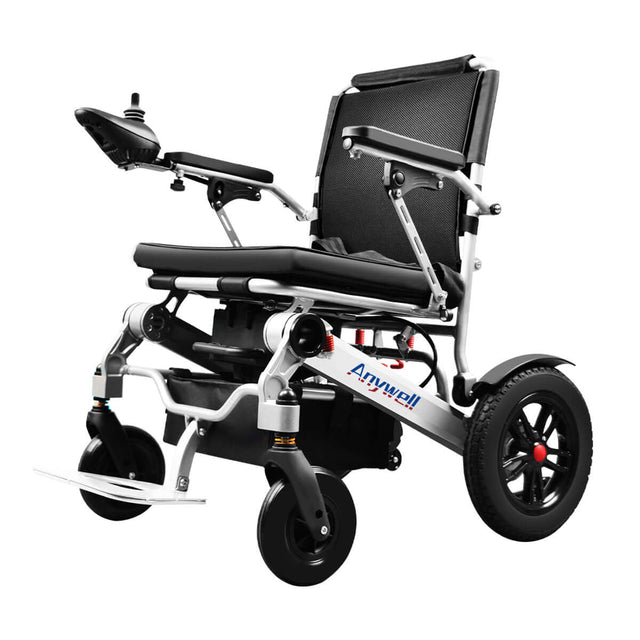
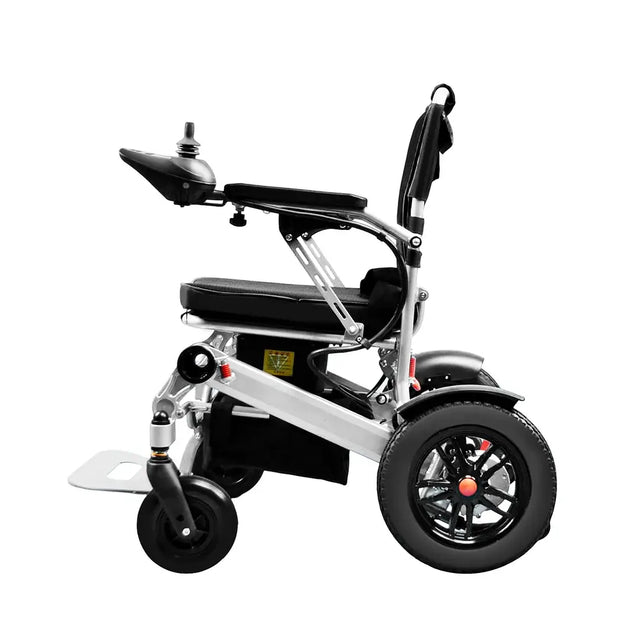
Empieza con comodidad del asiento, espacio de puertas, carga en vehículo y rutas diarias antes de elegir una silla o scooter.
Asiento y ajuste corporal
Compara ancho del asiento, capacidad de peso y comodidad diaria antes de elegir un modelo.
Rated Support
Match the model's rated support to the rider and daily-use expectations.
Puertas y almacenamiento
Mide la puerta, pasillo, área de guardado y ruta de giro más estrechos que usas.
Folding Storage
Choose a folding setup when apartment, home, or closet storage matters most.
Plan de carga en vehículo
Confirma si el peso del producto funciona con tu rampa, elevador, ayuda o espacio del vehículo.
Superficie de uso diario
Elige el producto según hogar, acera, entrada, camino pavimentado, rampa y uso exterior.
Chair vs Scooter Preference
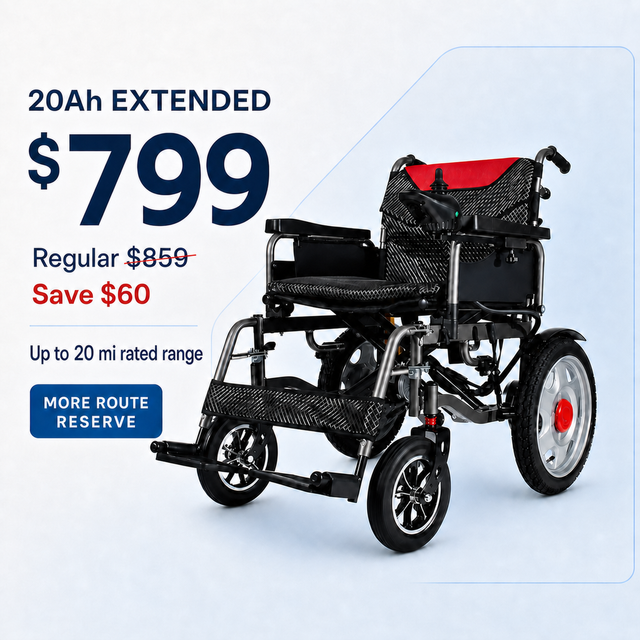
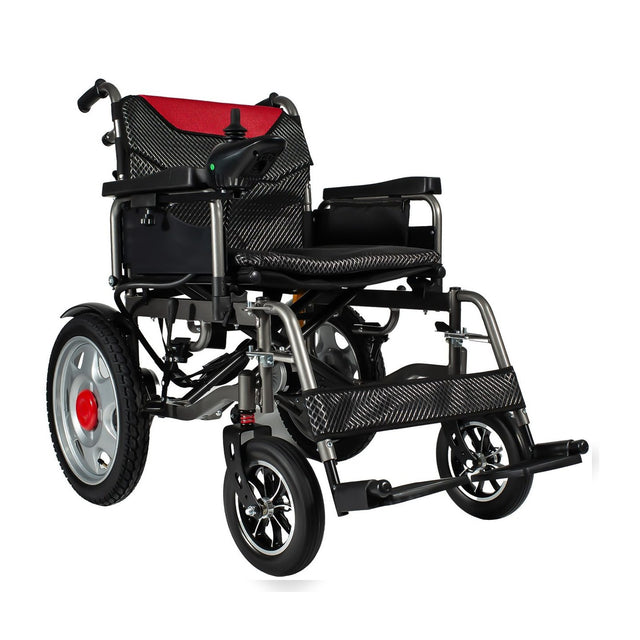
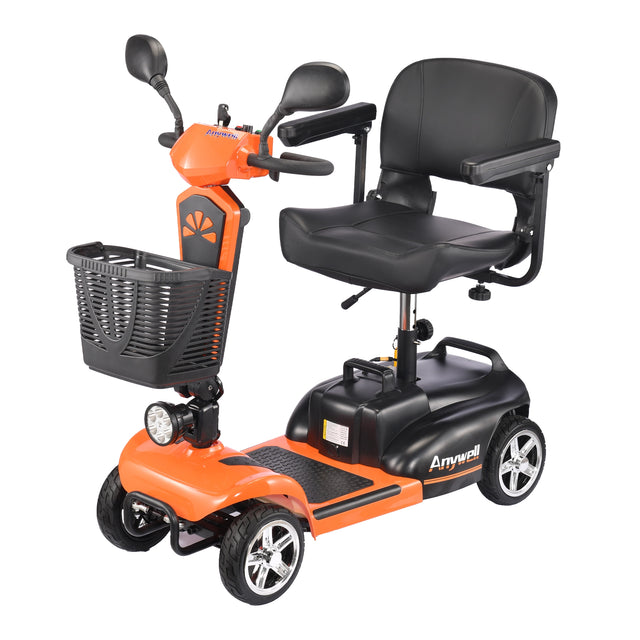
Choose a chair-style model for power wheelchair support or X-024 for scooter-style mobility.
Seated leg-length fit
How leg length changes wheelchair fit
Standing height is only a starting clue. Two people of the same height can need different seat depth and footrest positions, so use these examples as a visual check—not a fit guarantee.
Around 180 cm / 5 ft 11 in · example
Longer-leg example
If the setup is too short: the knees may sit high, the lower legs may feel crowded, or the feet may extend beyond their most supported position.
Check that the seat supports the thighs without pressing behind the knees.
Compare seated lower-leg length with the chair’s seat-to-footrest distance and adjustment range.
Below 170 cm / below 5 ft 7 in · example
Shorter-leg example
If the setup is too long or low: an over-deep seat can press behind the knees; a footplate set too low can leave the feet partly unsupported and encourage sliding.
Check that the back can stay supported without the seat edge crowding the back of the knees.
Confirm the footrest can be raised enough for full, comfortable foot support.
1 · Seated upper leg
Measure from the back of the pelvis to the back of the knee. As a fitting starting point, seat depth is commonly about 30–50 mm (about 1.2–2 in) shorter.
2 · Seated lower leg
Measure from just behind the knee to the heel with the usual footwear on, then compare it with the top-of-seat-to-footrest distance.
3 · Actual adjustment range
Verify the exact model’s seat depth and footrest range. If your measurement falls outside it, ask support before ordering.
Important: Do not choose by standing height alone. Measure in a stable seated position, check both legs if they differ, and use individual clinical or mobility-professional advice when posture, pain, swelling, limited knee motion, pressure risk, or asymmetry affects sitting.